Launching an ad on Facebook or Instagram is now something anyone can do in minutes, but turning an ad budget into real orders and sales is a completely different matter. That’s why many business and store owners look for a paid advertising agency to run their campaigns professionally — and then discover that telling a good agency from a bad one isn’t easy.
In this article we explain what paid advertising management really means, which technical and marketing elements you should check, and the metrics that help you judge the performance of any agency you work with.
What does paid advertising management mean?
Paid advertising management is a complete process that starts before an ad goes live and continues after it. It covers defining the business goal, choosing the right platform, building audiences, writing the messages and designing the ads, setting up tracking, then daily monitoring and continuous optimization based on the data.
In other words, you aren’t paying an ad agency to “press the publish button”; you’re paying for the decisions it makes every day about where your budget is spent and why.
The difference between running an ad and managing a professional campaign
Running an ad
Picking an existing post, choosing a broad audience, setting a budget, then waiting. This is usually what the “Boost post” button does, and while it may bring engagement, it rarely brings consistent sales.
Managing a professional campaign
- A specific goal tied to the business: sales, leads or WhatsApp messages.
- A well-planned campaign structure that separates audiences and messages to see what works.
- Several versions of each ad for testing, instead of relying on a single design.
- Accurate tracking of what happens after someone clicks the ad.
- Regular reviews of how the budget is allocated, pausing whatever isn’t working.
How do you choose the campaign objective?
Every ad platform asks you to choose a campaign objective, and that choice determines who the platform will show your ad to. If you choose “engagement”, the platform will look for people who tend to like and comment — not necessarily people who buy.
That’s why the objective must match what you actually want:
- Online store: a sales or conversions objective, with purchase tracking.
- Service business: a leads objective, through a form or direct messages.
- New brand: an awareness or reach objective at first, then a move to conversion objectives.
Choosing the right audience
Good targeting doesn’t mean narrowing the audience as much as possible; it means reaching the people with a real likelihood of buying. Professional agencies usually rely on three types of audience:
- Audiences based on interests and characteristics: such as location, age and interests related to your product.
- Retargeting audiences: people who visited your website, engaged with your accounts or added a product to their cart without completing the purchase.
- Lookalike audiences: people whose characteristics resemble those of your existing customers.
In the Gulf and wider Arab markets in particular, you need to take language, dialect, target cities and activity times into account, because what works in one city may not work the same way in another.
Meta, Google and TikTok: which platform suits you?
Meta ads (Facebook and Instagram)
Well suited to building demand and sparking interest in visual products, with wide options for targeting and retargeting. They work well for online stores, restaurants and consumer brands.
Google ads
They appear to people searching for your service or product at the moment of need, so purchase intent is often higher. They suit services and solutions that customers search for themselves, such as maintenance, consulting or local services.
TikTok ads
Strong at reaching audiences who engage with short video, and they need natural content that matches the platform’s style rather than traditional ads. They suit brands that can produce video content regularly.
A good agency doesn’t suggest every platform at once; it starts with the platform closest to your audience and the nature of your product, then expands based on the results.
Pixels and conversion tracking: the foundation everything is built on
Without proper tracking, a campaign is working almost blind. Tools such as Meta Pixel, TikTok Pixel and Google Ads conversion tracking let the platform know who completed a purchase or submitted a form, so it can show the ad to similar people.
Before launching any campaign, make sure your ad agency has:
- Installed the tracking codes on your website and tested them.
- Defined the important events, such as product views, add to cart, purchases and form submissions.
- Connected tracking to analytics tools such as Google Analytics to compare the data.
And remember that tracking depends on a website that works properly and quickly; so also check our guide to website design for businesses.
Ad testing: how do you know what works?
Nobody can know in advance which design or headline will perform best. That’s why professional management relies on structured testing:
- Testing several angles for the message: price, quality, speed or solving a specific problem.
- Testing different formats: a single image, a short video or a carousel.
- Testing different audiences with small budgets before scaling up.
- Changing one element at a time wherever possible, to understand what caused the difference.
Successful testing depends on the quality of the creative, which is where advertising meets the content team’s work. Read more about this in our article on social media management for businesses.
The metrics you need to understand
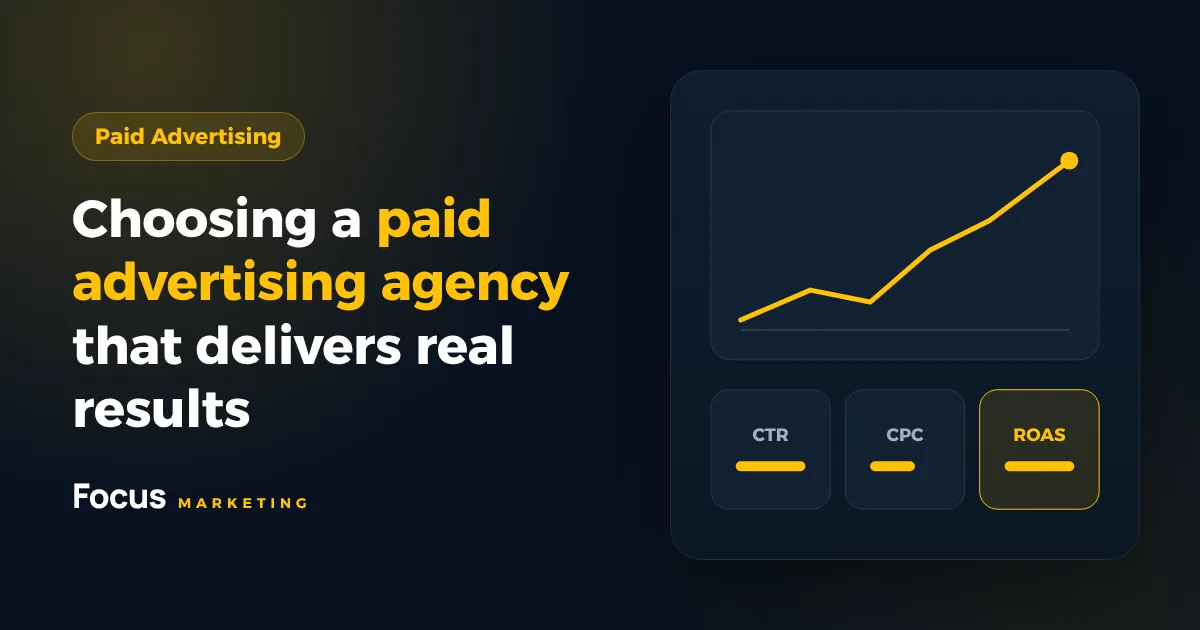
Ad reports are full of abbreviations; these are the most important:
- CPM (cost per thousand impressions): how much you pay for your ad to be shown a thousand times. Useful for understanding the cost of reaching your audience.
- CTR (click-through rate): the share of people who clicked the ad out of those who saw it. It reflects how appealing the ad is to the audience.
- CPC (cost per click): the average amount you pay for each click.
- Conversions: the number of important actions completed, such as purchases or submitted requests.
- CPA (cost per acquisition): how much each conversion cost you on average.
- ROAS (return on ad spend): the value of sales generated divided by the cost of the ads.
Don’t judge a campaign by a single metric. A high click-through rate with few conversions may mean the problem lies in the landing page or the offer, not in the ad itself.
Why is money sometimes spent without results?
- The wrong campaign objective: such as running an engagement campaign and expecting sales from it.
- No tracking: so the platform doesn’t know who bought, and neither do you know what works.
- A weak landing page: slow, unclear or not working well on mobile.
- An unconvincing offer: a good ad can’t make up for an uncompetitive price or an unclear offer.
- Stopping campaigns too early or changing them constantly: platforms need enough time and data to learn.
Common mistakes in paid campaigns
- Targeting a very broad audience without a clear message for a specific segment.
- Relying on a single ad design for the whole campaign.
- Neglecting retargeting for people who visited the website but didn’t buy.
- Not replying quickly to messages and comments generated by the ads.
- Raising the budget suddenly before results have stabilised.
How do you measure a paid advertising agency’s success?
Ask yourself these questions every month:
- Are the agreed goals clear and tied to sales or leads?
- Do you receive understandable reports showing costs, results and next steps?
- Is the cost per conversion, or the quality of leads, improving over time?
- Does the agency suggest new tests and ideas, or repeat what it did before?
- Do you have full access to your ad accounts and their data?
If the answers are clear and positive, you’re most likely working with a paid advertising agency that works in your interest. And if you’re still comparing agencies more generally, our guide on how to choose the best digital marketing company may help.
Frequently asked questions
What budget is right for starting paid advertising?
There’s no single figure that suits everyone; the budget depends on the platform, the market, the competition and the value of the product. What matters most is that the budget is enough to gather data for testing and optimization, and that you start with a trial phase before scaling.
Does the agency’s fee include the ad budget?
In most cases the management fee is separate from the budget paid directly to the ad platforms. Make sure this is stated in writing in the offer before you sign.
When do paid advertising results appear?
Campaigns start bringing in traffic once they launch, but reaching stable performance usually takes a period of testing and optimization until the platform has gathered enough data.
Do I need a website to run paid ads?
You can run campaigns that lead to messages or in-platform forms, but a fast, clear website gives you more control over the customer experience and allows more accurate conversion tracking.
Turn your ad budget into results
If you want your campaigns on Meta, Google and TikTok managed with a clear plan, accurate tracking and understandable reports, explore Focus Marketing’s paid advertising management service, or contact us on WhatsApp and get a free consultation on 01099038936.